

EV Charging: A New Frontier for Solar Installers
The hum of electric motors is quickly becoming the new soundtrack of American roads. From the bustling streets of downtown Austin to the sprawling suburbs near Zilker Park, electric vehicles (EVs) are no longer a novelty; they are a rapidly growing reality. For solar installers, this electric revolution isn’t a distant trend—it’s the most significant opportunity to knock on our industry’s door in a decade. The very same customers who value the energy independence and cost savings of solar are now plugging in their cars every night.
As a solar professional, you’re not just installing panels; you’re building the future of personal energy. Integrating EV charging into your offerings isn’t just a logical next step; it’s a strategic move that positions your business at the forefront of a converging market. It’s about providing a complete energy solution for a home or business. At Solar Plan Sets, we understand that expanding your services needs to be seamless and profitable. This guide is designed to show you why the rise of EV charging is your new frontier and how you can confidently conquer it for a more robust and resilient future.
The Inevitable Merger
Why Solar and EVs are a Perfect Match
The synergy between solar power and electric vehicles is undeniable. Both technologies appeal to a similar customer base: those who are environmentally conscious, technologically savvy, and keen on reducing long-term energy costs. The growth in one market directly fuels the other. According to the International Energy Agency, global EV sales continue to surge, with millions of new electric cars hitting the road each year. This explosion in EV ownership creates a massive, built-in demand for cost-effective charging solutions.
Think about the typical EV owner. They arrive home from work and plug in their vehicle, causing a significant spike in their home’s electricity consumption overnight. For many, this translates to higher utility bills and a reliance on a grid that can be unpredictable. What’s the perfect solution? Fueling their car with clean, self-generated solar energy.
By offering EV charger installations, you’re providing the missing piece of the puzzle. You are empowering your customers to:
- Slash or Eliminate Fueling Costs: Charging with solar is significantly cheaper than buying gasoline and, in many cases, cheaper than pulling electricity from the grid during peak hours.
- Achieve True Energy Independence: When paired with a battery storage system, customers can power their homes and their vehicles day or night, even during a grid outage. This resilience is a powerful selling point, especially in areas that have experienced grid instability.
- Maximize their Solar Investment: An EV is essentially a battery on wheels. It provides a practical and highly efficient way for homeowners to use the solar energy they generate, ensuring less power is sent back to the grid for minimal compensation.
For a solar installer, every EV in a driveway is a lead. You already have the foundational skills and customer trust to turn that lead into a comprehensive, high-value project.
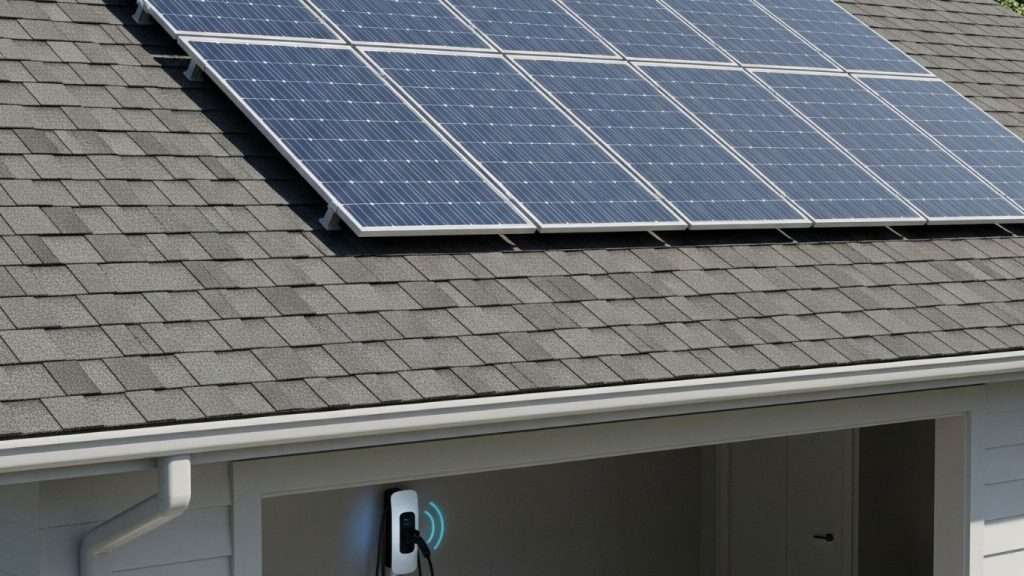
Why Solar Installers are Perfectly Positioned to Lead the Charge
Expanding into a new service area can be daunting, but the transition to including EV charger installations is a natural evolution for any solar business. You already possess the core competencies needed to excel.
- Electrical Expertise: At its core, installing a Level 2 EV charger is an electrical project. Your teams are already proficient in working with residential and commercial electrical panels, conduit, wiring, and inverters. You understand load calculations and how to safely integrate new circuits—skills that are directly transferable.
- Navigating AHJs and Permitting: You are veterans of the permitting process. You speak the language of the Authority Having Jurisdiction (AHJ) and know how to prepare and submit the detailed documentation required for project approval. While EV charger installations have their own specific requirements, the fundamental process is one you’ve mastered. This is a significant advantage over a general electrician who may not have the same level of experience with plan sets for energy projects.
- Established Customer Trust: A homeowner who trusted you to put a power plant on their roof is highly likely to trust you with their vehicle charging needs. You’ve already built a rapport and demonstrated your company’s quality and professionalism. An EV charger is a natural upsell or a fantastic reason to re-engage with past customers. Offering a bundled solar and EV charger package simplifies the decision-making process for new clients, as they only have to deal with one contractor for their entire energy upgrade.
At Solar Plan Sets, we bridge the final gap. While you have the on-the-ground skills, we provide the specialized, permit-ready plans you need to make this expansion effortless. Our EV Charger Plan Sets are designed with the same accuracy and attention to detail as our renowned solar plans, ensuring you can meet all AHJ requirements without the headache.
The Technical Details
What Installers Need to Know
While the leap to EV charging is natural, it’s essential to understand the technical specifications to ensure you are providing the right solutions for your customers. The primary consideration is the charging level, which determines the speed and power of the installation.
| Charging Level | Voltage | Typical Charging Speed | Best Use Case | Integration Complexity |
| Level 1 | 120V (Standard Outlet) | 3-5 miles of range per hour | Basic, overnight charging for low-mileage drivers. | Low (plugs into existing outlet) |
| Level 2 | 240V (Dryer Outlet) | 15-40 miles of range per hour | The standard for home and commercial solar integration. | Moderate (Requires dedicated circuit) |
| DC Fast Charging | 480V+ DC | 100+ miles of range in 20-30 min | Public charging stations, highway corridors. | High (Requires commercial-grade power) |
For virtually all residential and most commercial workplace charging applications, Level 2 is the sweet spot. It offers a balance of charging speed and installation feasibility that pairs perfectly with a solar energy system.
When planning a project that includes an EV charger, the most critical step is the load calculation. You must account for the additional energy demand of the vehicle. An average EV driving 1,000 miles a month will consume roughly 250-350 kWh of electricity. This additional usage must be factored into the solar array sizing. If the customer also wants battery backup, the storage system must be sized to handle the home’s critical loads plus the demand from the EV charger.
This is where smart chargers become invaluable. These devices can communicate with the solar inverter to ensure the EV is charged primarily with surplus solar power, rather than drawing from the grid. This intelligent load management is key to delivering on the promise of driving on sunshine. For a deeper dive into the challenges and solutions of integrating renewables, a study published in E3S Web of Conferences offers valuable insights into energy management and grid integration.
EV Charging Integration FAQs
We know you have questions. Here are answers to a few common ones we receive from installers looking to expand their services.
Do I need a separate permit for a solar EV charger installation?
In most cases, yes. Even if you are installing the EV charger as part of a larger solar project, the AHJ will typically require specific documentation and a separate permit for the EV charging equipment. Our EV Charger Plan Sets are designed to meet these exact requirements and can be bundled with our standard solar plan sets to streamline your submission process.
How much bigger does a solar system need to be to support an EV charger?
This depends entirely on the customer’s driving habits and the vehicle they own. A good rule of thumb is to add between 1.5 kW and 2.5 kW to the solar array’s size to cover the energy needs of a typical EV driver. Our expert design team can help you perform precise calculations to ensure your system is sized perfectly for your customer’s home and vehicle.
Can you add an EV charger to an existing solar panel system?
Absolutely. This is a massive opportunity to re-engage with your existing customer base. The process involves performing a new load calculation to see if the current solar array has enough excess production to support the charger. In some cases, a small expansion of the solar array may be needed. In either case, we can provide the necessary Engineering Stamps and plan sets for the EV charger addition and any solar modifications.
Your Partner in Building a Resilient Future
The integration of EV charging is more than just a new revenue stream; it’s a fundamental shift in how we approach energy. As a solar installer, you are uniquely qualified to lead this change. You have the skills, the trust, and the ambition to deliver complete energy solutions.
The only remaining hurdle is the paperwork—and that’s where we come in.
Stop letting complex permitting and design requirements slow down your growth. With our fast, affordable, and accurate plan sets, you can confidently step into the EV charging market. We guarantee our plans will meet all AHJ requirements, and we back that promise with unlimited revisions to ensure your project gets the green light.
Ready to expand your services and meet the growing demand for integrated solar and EV solutions?
Order Your Permit-Ready EV Charger Plan Set Today!
Have questions about a specific project? Contact our expert design team now, and let us help you build a more robust and resilient future for your customers, one installation at a time.

